NOAA says a very strong El Niño makes a warmer winter more likely around the Great Lakes. What to do now, and when to decide.
Tempra Labs
Tempra Signal
The weekly newsletter from Tempra Labs
Weather and climate intelligence for business decisions  ·  Chicago first, then the world
Issue 01  ·  Friday, October 23, 2026
 
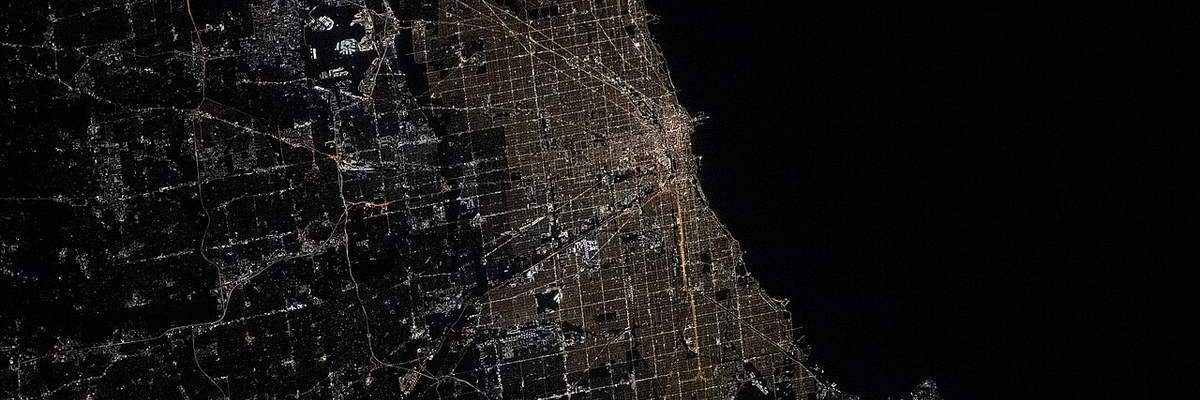
Chicago and its lakefront at night, photographed from the International Space Station
Photo: NASA, International Space Station, May 15, 2025 (public domain)

A very strong El Niño is here. Don't change your winter plan yet.

NOAA says a very strong El Niño makes a warmer winter more likely around the Great Lakes. What to do now, and when to decide.

 
THE CALL   WATCH
Keep your winter plan for now. NOAA says a warmer-than-normal winter is more likely around the Great Lakes, but not certain. Keep snow, ice, heating and crew cover as planned. Decide bigger budget changes after NOAA's next update on Nov 12.

New to this? El Niño is the warm phase of a natural climate pattern in the tropical Pacific, as NOAA describes it. This year's is very strong, and NOAA says it is heavily shaping its winter outlook.

Chicago this week

Tempra analysis of NWS Chicago (Oct 22) and NOAA (Oct 22) data.

HeatCALMMild and dry through the weekend.
RainWATCHRain is possible early to midweek, but the timing is uncertain. Keep deliveries and crews flexible.
FloodWATCHDry now, but NOAA expects more rain across the Midwest Oct 30–Nov 5. Check drainage and docks.
FogWATCHDense fog is possible early Friday in far northeast Illinois (Lake, McHenry and northern Cook counties), clearing after sunrise. Allow extra travel time.
CALM
Carry on
WATCH
Get ready
ACT
Act now

Read more: NWS Chicago · NOAA

What it means for your organization

If you run Decide Do now
Facilities and institutions Snow, ice and heating contracts Keep coverage. Ask vendors how capacity and charges flex.
Utilities and infrastructure Readiness, peak demand and energy budgets Keep cold-event scenarios: a warm winter still has cold snaps. Check staffing, contractors and critical-site access.
Freight and procurement Gulf and Pacific routing Ask carriers which gateways, lead times and surcharges would change.
Construction and field operations Work windows and staffing Rain timing is uncertain: plan which tasks can move.
Finance and risk Winter budget Hold a base case and a cold case. Review after Nov 12, or at your own deadline.

Before you change capacity, name the forecast, the threshold and the deadline that would justify it.

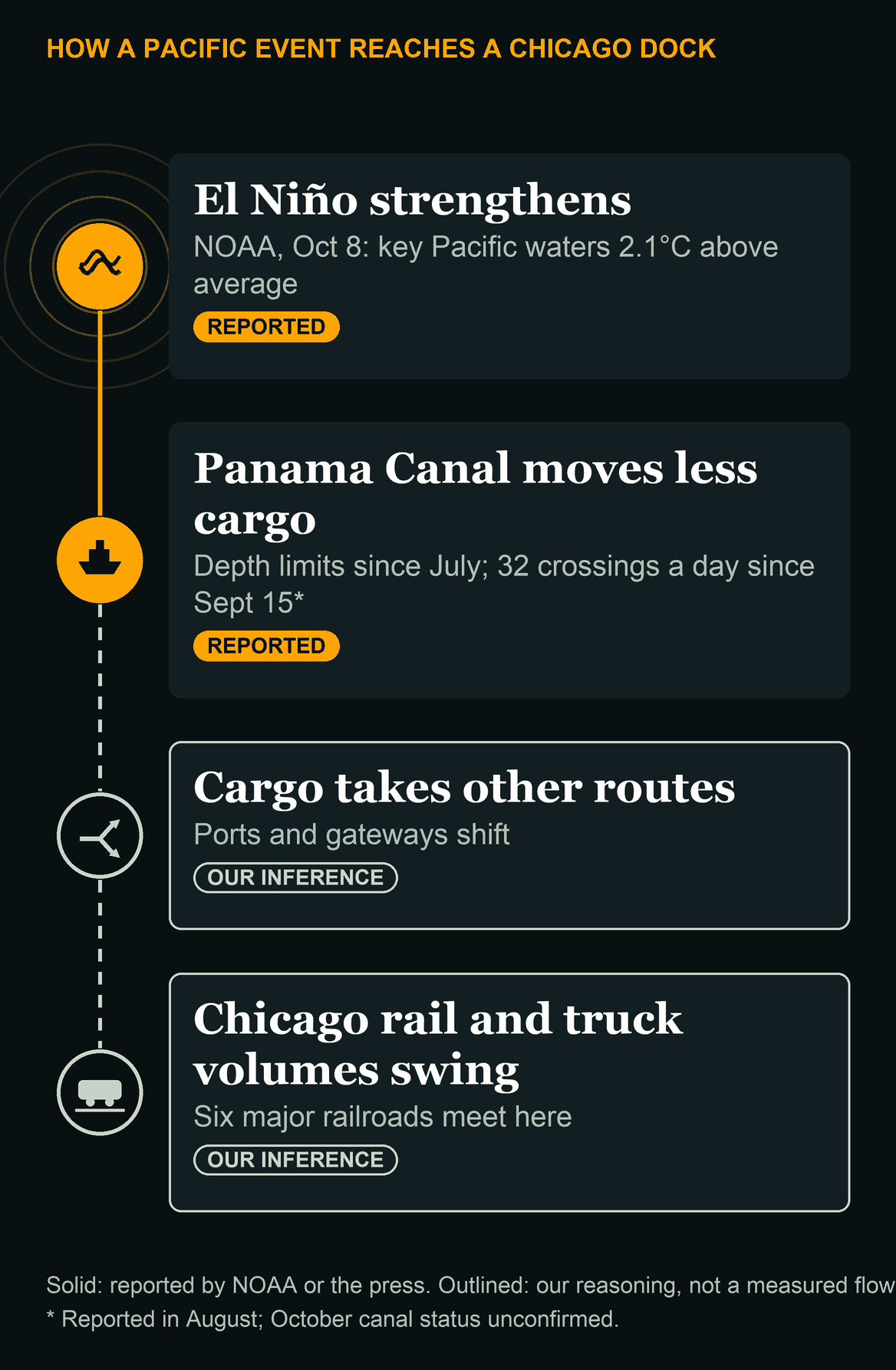
How a Pacific event can reach a Chicago dock

A four-step chain from the Pacific to Chicago. 1, reported: El Niño strengthens; NOAA, Oct 8: key Pacific waters are 2.1°C above average. 2, reported: the Panama Canal moves less cargo; ship depth limits since July and 32 crossings a day since Sept 15 (October status unconfirmed). 3, our inference: cargo takes other routes; ports and gateways shift. 4, our inference: Chicago's rail and truck volumes swing; six major railroads meet here.
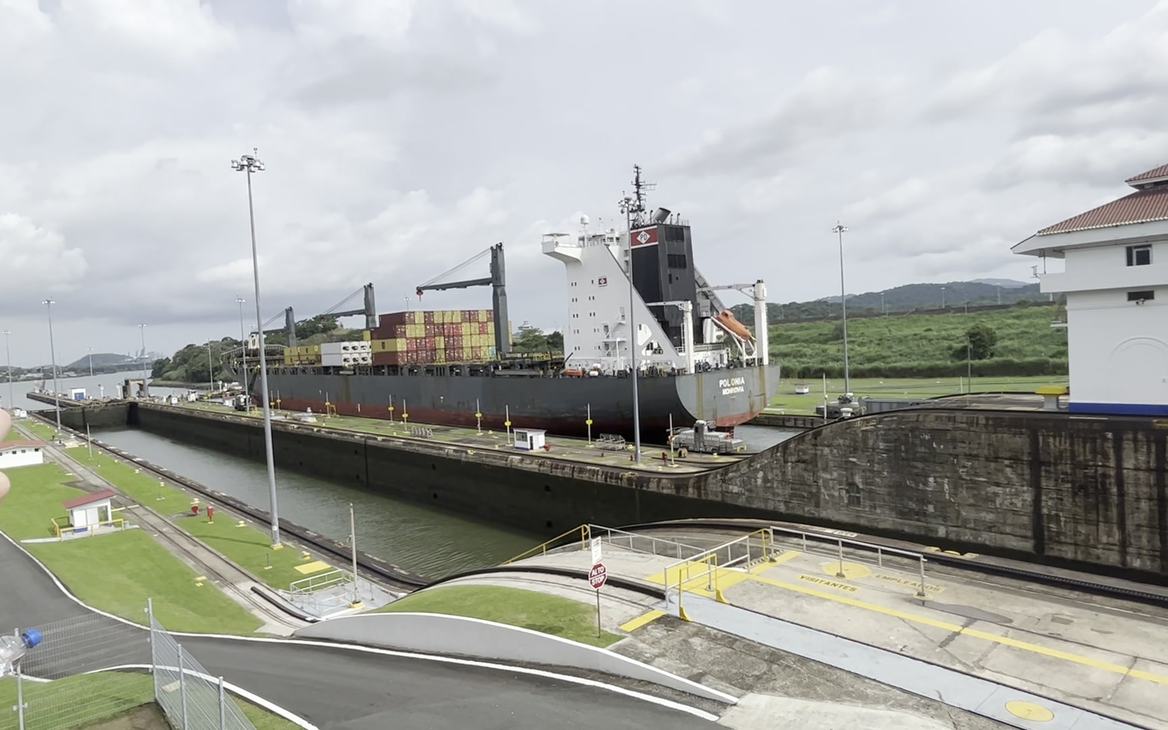
A ship in the Panama Canal
Photo: Tempra Labs, Panama Canal. Shown for illustration; not a current view of the canal.

The first two steps are reported. The last two are our reasoning. If your goods arrive through Gulf or Pacific ports, ask your carriers now which gateways, lead times and surcharges would change.

Read more
gCaptain: El Niño and shipping (Jul 13) →
Marine Insight: Panama Canal daily limits (Aug 21) →

The number

83%chance of an El Niño stronger than any since 1950 this Oct–Dec: about 8 in 10. That is the odds of the El Niño itself, not what it does to your winter.
NOAA, Oct 8

Decision checkpoints

When What Why
Before each shift Local forecast (NWS Chicago) Rain possible Oct 26–28, timing uncertain; fog early Friday
Oct 30–Nov 5 NOAA wet-weather outlook Check drainage
Your own commitment deadline Contracts and budgets Decide on your evidence and your deadline, not on NOAA's calendar
Nov 12 NOAA El Niño update Reassess the winter odds

Bring us one operating decision. Reply with a site, an asset or a decision weather could affect. We'll tell you what the evidence says, and we'll answer the best ones in print. Corrections are welcome too.

Disclaimer: Forecast data comes from NOAA and the National Weather Service. The CALM, WATCH and ACT ratings and the table above are Tempra's analysis, not official ratings, and do not replace agency forecasts and warnings. General information, not advice for your operations.

ShareLinkedInLinkedInFacebookFacebookXXForwardForward

Got this from someone else? Subscribe


Tempra Signal is the weekly newsletter from Tempra Labs, a Chicago-based climate and weather intelligence company. Follow us: LinkedIn · tempralabs.ai

Tempra Labs Inc. | contact@tempralabs.ai