Act while it still helps
Protective steps ranked by whether they can be finished before the earliest likely arrival.
Early access
Asset Flood Intelligence tracks an approaching storm all the way to one specific building: the chance water gets in, how deep it could go, which protective steps still have time to work, and an itemized repair estimate afterwards.
The decision Will water get inside, what can still be done, and what will the repair cost?
Primary audience Commercial property managers with flood-exposed buildings: property operations and facilities directors.
Photo: MarkBuckawicki / Wikimedia Commons, CC0
Flood maps show water in the street. Owners and insurers need to know whether it reaches the basement.
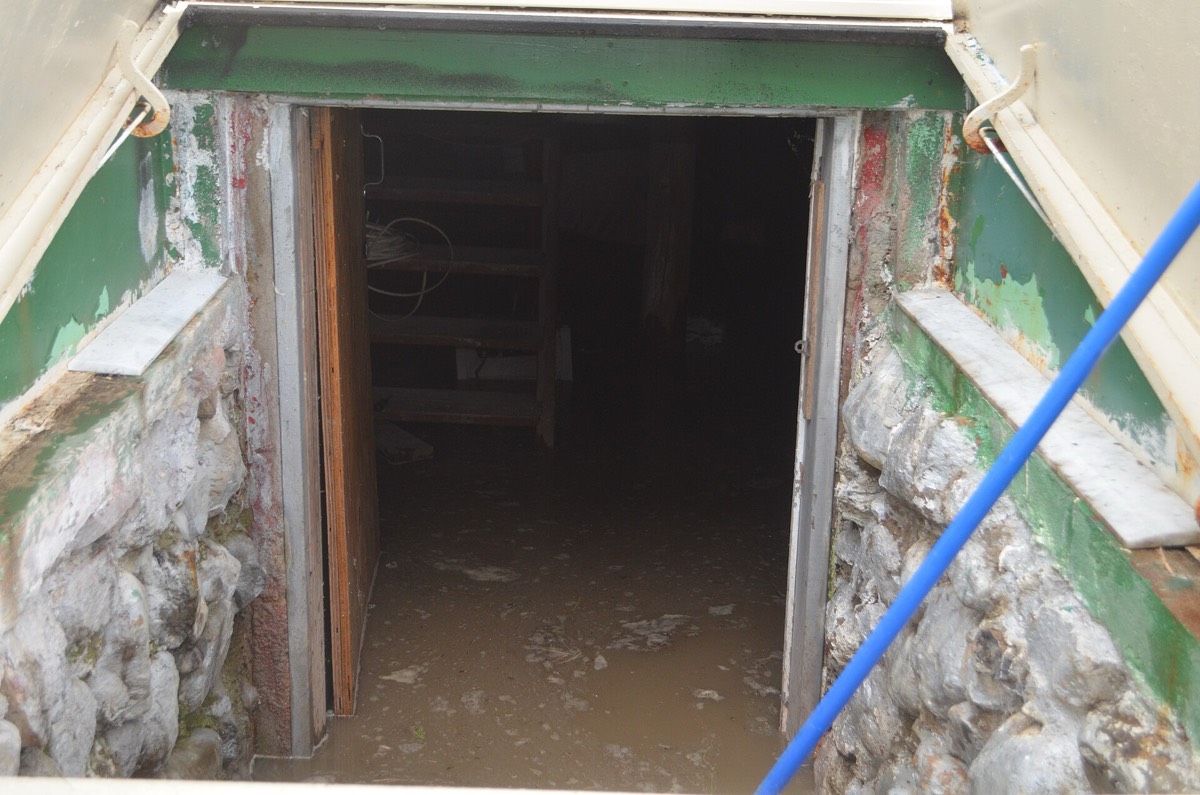
A flood map can say a block may see a foot of water. It cannot say whether that water crosses a window well, backs up a drain or reaches finished rooms, or what fixing them will cost.
Protective steps ranked by whether they can be finished before the earliest likely arrival.
An itemized repair worksheet with editable quantities and local prices, re-run as the forecast changes.
Before-and-after observations, photos and quotes kept together for insurers, brokers and agencies.
Each step narrows the question from the neighborhood to the building, and from possibility to cost.
Rainfall scenarios for the coming storm, refreshed with each new issuance.
Where water may pool around the building, from rainfall and terrain data.
The chance it crosses openings, drains or window wells.
Possible depth, and the rooms likely affected.
Which actions still have time to work.
An itemized, editable range for the likely damage.
Observations and quotes that confirm or revise the estimate.
Where each team fits
A portfolio watch before the storm and a documented scope after it.
Area-level views for planning, with property detail kept private.
A short list of buildings to prepare, and what to do at each one.
A plain answer: will water get in, and what can I still do?
One decision, one territory, a few weeks. The first conversation settles three things.
The building, its openings and local repair prices.
Water-entry scenarios, protective steps that still have time, repair-cost ranges.
Usefulness of the checklist, agreement with observed entry paths, repair-input accuracy.
Early access. Estimates are not contractor quotations or claim determinations. Discuss a pilot