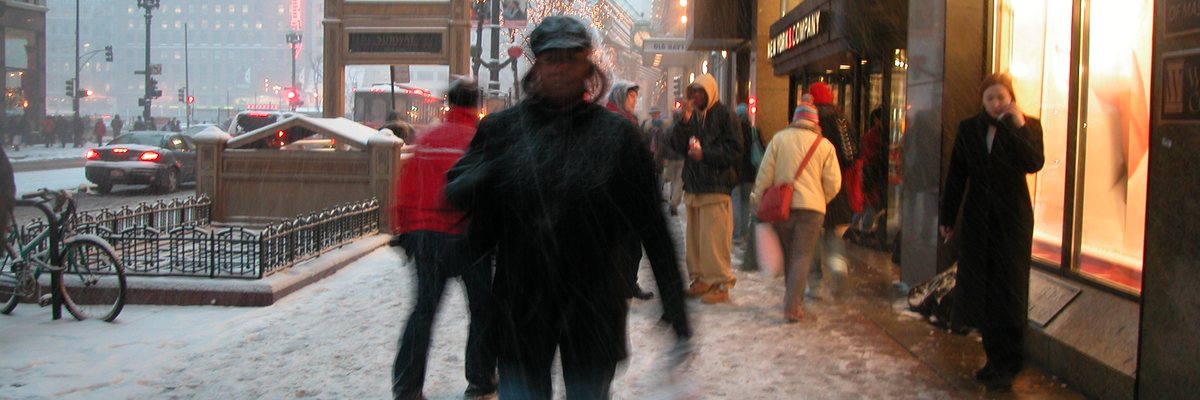
 Photo: David Wilson, CC BY 2.0. State Street, Chicago, December 2005 (file photo). Review your energy costs before the next cold spell.Even if winter is mild overall, a few very cold days can increase heating costs and disrupt operations. Chicago-area businesses can prepare now: review your energy contract, check your heating equipment and confirm how you would respond to a request to reduce electricity use. Ask these three questions before the next cold spell.
Your bill depends on how much energy you use, your contract price and other charges. Ask your supplier which costs can change and request an estimate for a colder week using your own contract.
If your business is enrolled in a program that pays it to reduce electricity use when requested, confirm how much notice you receive, what you must reduce and who will respond. Keep essential heating, safety systems and critical equipment running.
Arrange required boiler and generator maintenance, confirm fuel-delivery arrangements and check pipes in unoccupied spaces. Follow your site's maintenance and safety procedures. Lower wholesale gas prices do not automatically mean a lower bill.
This does not mean your business's heating bill will fall by 16%. EIA's November 10 outlook says a warm start to November reduced expected heating demand. Your costs still depend on actual energy use and the terms of your contract.
|

 Can the price I pay change during a cold spell?
 If we are asked to reduce electricity use, what can we safely turn down or reschedule?
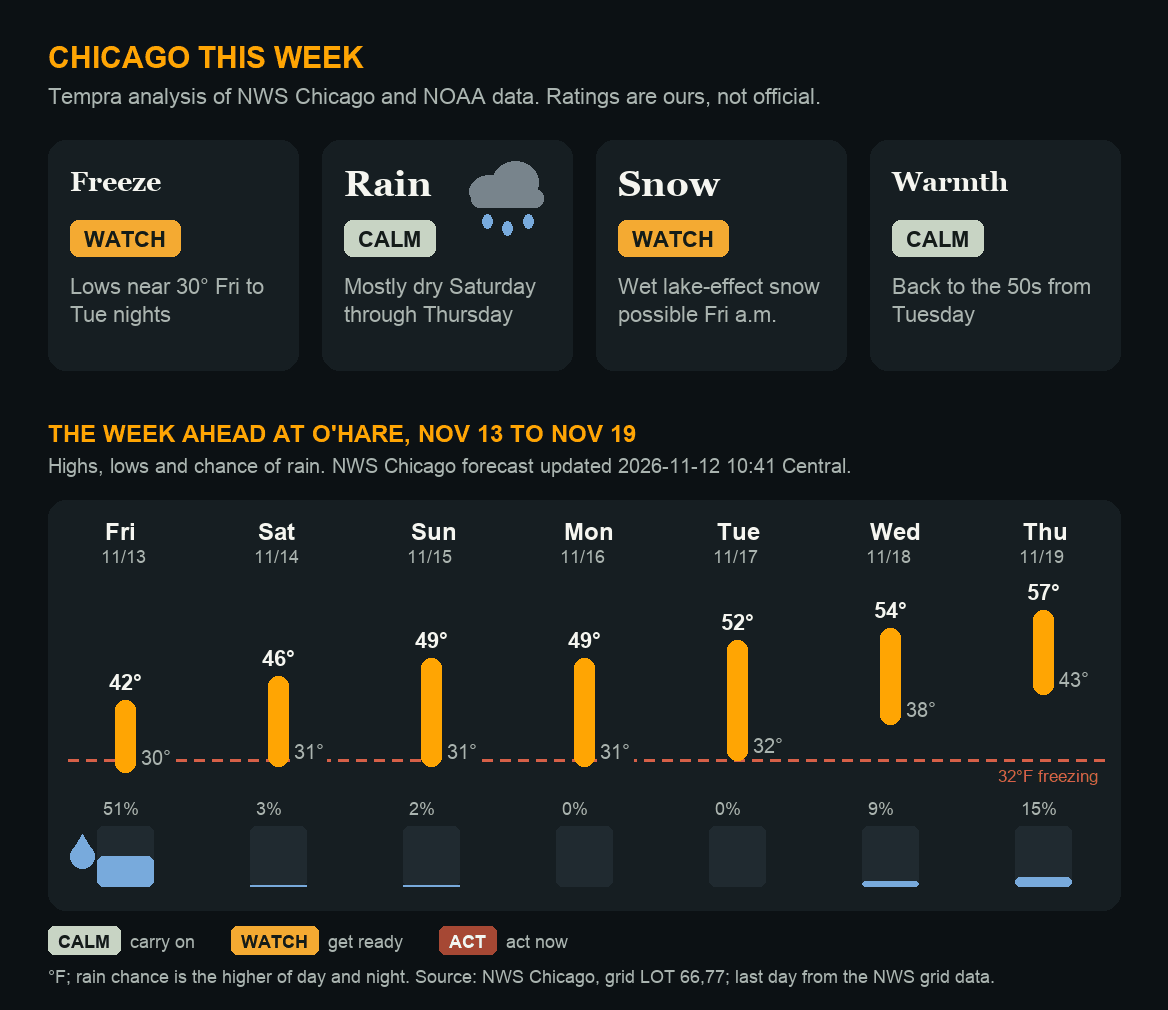 |
| The week ahead at O'Hare. Source: NWS Chicago. |
Before dispatching crews or planning deliveries, check the hourly forecast and current alerts for the actual destination. Conditions in northwest Indiana can differ from those at O'Hare.
What your organization should check
 Facilities teams
Assign someone to confirm heating schedules, protect exposed pipes and check empty spaces.
 Manufacturing and data operations
Identify which tasks can safely move to another time if your demand-response provider requests a reduction. Name the person who can approve it.
 Schools, hospitals, housing and public services
Keep essential spaces heated and critical equipment powered. Confirm backup arrangements, fuel supplies and who will notify building users if services change.
 Finance and purchasing teams
Compare an ordinary winter week with a colder week using actual usage and contract terms. Assign someone to review the estimate when forecasts or supplier information change.
A mild winter outlook still calls for cold-weather preparation.
PJM and MISO expect enough electricity supply for the winter conditions in their assessments, but both also prepare for more difficult weather. Some customers enrolled in demand-response programs may be asked to reduce electricity use. Ask your utility or program provider which instructions apply to your site.
NOAA's November 12 update says a strong-to-very-strong El Niño is likely through January–March 2027. This describes conditions in the tropical Pacific; it does not rule out very cold days in Chicago.
Use seasonal outlooks to review budget assumptions. Use local forecasts and utility notices to make daily operating decisions.
 Check mountain routes if your deliveries come from the West Coast.
If your deliveries cross the Sierra Nevada, check current road conditions and ask your carrier whether arrival times could change. Read current NWS Reno forecasts and alerts.
Tell us which site or operation you are planning for.
Reply with your location and the decision you need to make. We can help you identify the weather information to discuss with your facilities team, energy supplier or carrier.
Energy figures use EIA's November 10 outlook; grid assessments use PJM's November 5 and MISO's October 28 releases; the El Niño discussion is dated November 12. Forecasts are NWS Chicago's latest when this issue was finalized. Check current forecasts and utility instructions before acting. Operational suggestions are Tempra's interpretation.
| Share |  LinkedIn |  Facebook |  X |  Forward |
Got this from someone else? Subscribe
Tempra Signal is the weekly newsletter from Tempra Labs, a Chicago-based climate and weather intelligence company. Follow us: LinkedIn · tempralabs.ai
Tempra Labs Inc. | contact@tempralabs.ai